;)
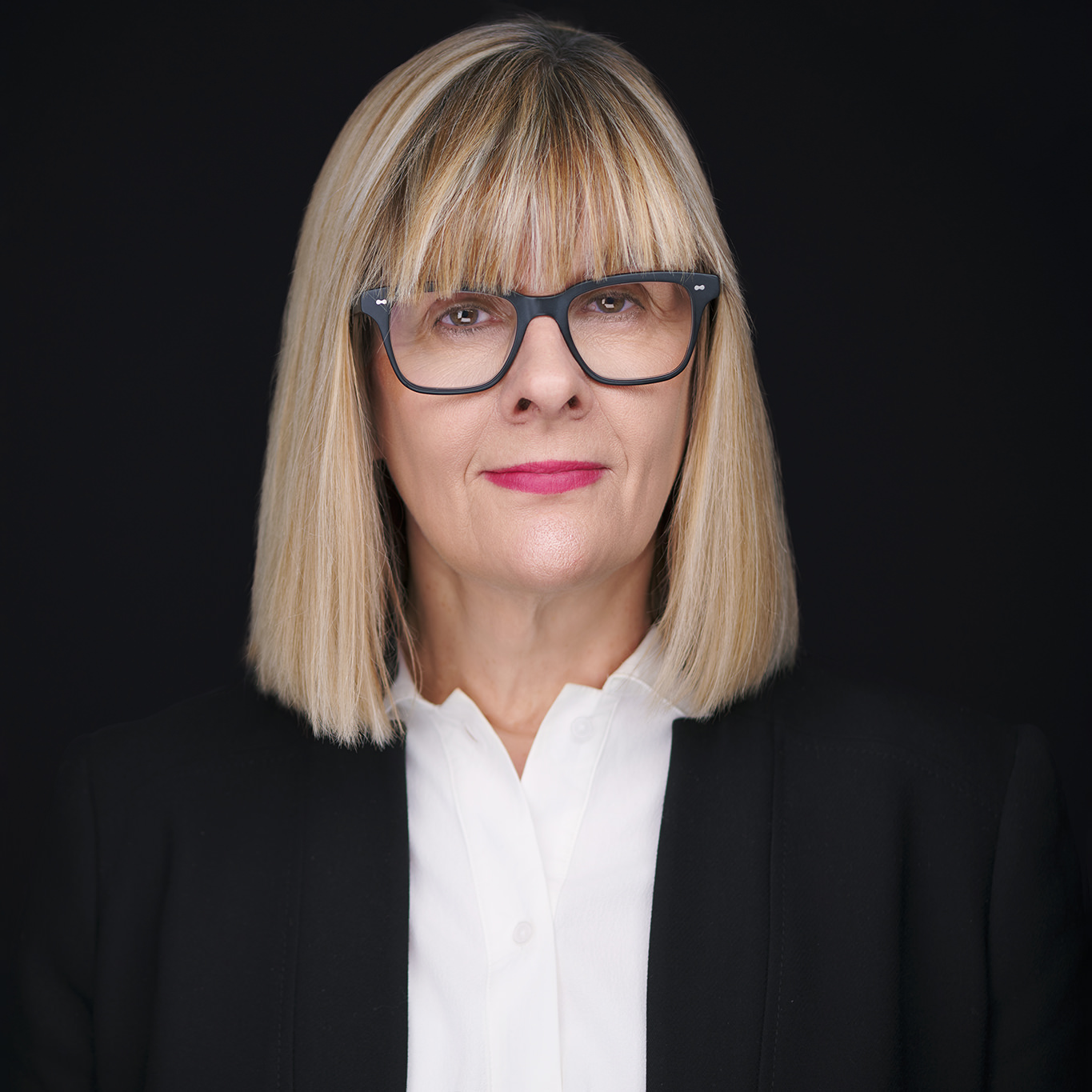
Meet Claire Newton, PhD
Claire Newton has spent more than 25 years turning ambitious science into therapies for patients living with serious diseases. Across the US and Europe, she has led global development programmes spanning biologics, gene and cell therapies and siRNA, in pursuit of first-in-class treatments for conditions with significant unmet medical need.
Her career includes leadership roles at Sarepta Therapeutics, Orchard Therapeutics, Amgen, Ark Therapeutics and Takeda, where she built a reputation for bringing clinical, regulatory, CMC, medical and commercial teams together around a single goal: getting a therapy safely to the patients who need it. Along the way, she’s built high-performing cross-functional teams that can navigate complex development pathways and still have fun doing it.
Claire’s philosophy is simple: patients come first. Every decision starts with their needs, their experience, and the real difference a therapy can make in their lives. She pairs that conviction with a pragmatic streak, turning novel science into workable development plans and building teams that can deliver on them, at speed.
You’ve worked across gene therapy, siRNA and biologics, across a range of serious diseases. What have these different modalities and disease areas taught you about what it really takes to bring a promising therapy to patients?
Working across gene therapy, siRNA and biologics teaches you that the science is only ever half the job. Each modality brings its own manufacturing complexity, its own safety and monitoring requirements, and its own regulatory precedent — or lack of one. So what works for a one-time gene therapy doesn’t translate directly to a chronic biologic. What stays constant is the discipline: rigorous nonclinical and CMC foundations, comprehensive risk assessments, and a development plan that is realistic about timelines.
You’ve led programmes involving teams across different functions, organisations and countries. What does great cross-functional leadership look like to you in practice?
Diverse teams are vital, and they work best when every voice is heard equally. Strong, extroverted team members can dominate a meeting; quieter, more introverted voices often hold very thoughtful contributions, and they need space to be heard too. Understanding the “why” behind each person, what motivates them and how they work best, lets you support each person differently, in the way that works for them.
Great leaders know it takes a village to challenge existing assumptions, established ways of working and standard regulatory pathways.
You’ve worked across the US and Europe. How does operating across different regulatory and healthcare environments change how you think about global development strategy?
You have to learn quickly that there’s no single playbook. The FDA and EMA don’t always want the same evidence on the same timeline from exactly the same population. Healthcare systems differ too, in how they define standard of care, access and reimbursement. A genuinely global strategy must be built with every audience in mind from day one — not designed for one region and adapted for the rest afterwards. In practice that means designing trials and CMC packages robust enough to support multiple jurisdictions at once, understanding where regulatory pathways diverge or align.
In areas where the science is rapidly evolving — from immune-mediated disease to advanced therapies — how do you balance the need to move quickly with the responsibility to make thoughtful, evidence-based decisions for patients?
Speed and rigour are not really in tension as often as people assume — the risk is mistaking speed for shortcuts. Moving quickly means removing friction: parallel workstreams, spending at risk, faster decision-making. It does not mean skipping the evidence a therapy needs to be safe and effective. In fast-evolving science, it means staying close to emerging data, being willing to change course when new evidence tells you to and building enough flexibility into a development plan that thoughtful and fast can coexist. Patients living with serious disease don’t have time for a slow process, but they cannot afford a rushed one either.
Some of the most challenging development programmes involve uncertainty on almost every side. How do you help a team move forward when there isn’t an obvious answer?
Taking a step back helps because it adds perspective and reminds everyone that a decision will always carry some risk; the real question is which risk you are willing to accept. This risk-based approach helps every function understand the residual risk in play, and what data would discharge the risk (and when). Organisations differ in how much risk they’re willing to carry, which is exactly why strong governance matters: it keeps decision-making structured and makes sure both confirming and disconfirming information is interrogated before a decision is made.
When you’re working on a complex development programme, how do you make sure the patient doesn’t get lost among the science, regulatory requirements, timelines and business decisions?
Simply put, the patient is always at the heart of what we do. The studies we run should consider the burden on the patient when designing the study, and the burden of tests required for certain conditions, while weighing up the need to generate robust scientific evidence that will ultimately support a label. Ethical and healthcare-compliance considerations are equally important, to ensure that regulators across the globe will accept the data.
What do you think the biopharma industry sometimes gets wrong about the relationship between operational excellence and patient-centricity?
Often the two get treated as competing priorities: operational excellence measured in timelines and budgets, patient-centricity treated as a separate conversation bolted on afterwards. The best operational decisions are usually the patient-centric ones: a study designed around what patients can realistically tolerate recruits faster and generates cleaner data than one designed for statistical elegance. When organisations get this wrong, it can be because the two are owned by different teams speaking different languages. Getting it right means building patient experience into the operational plan from day one, not squeezing it in at the end.
You’re known for bringing clarity to complex programmes. What are some of the early signs that a development programme needs better alignment or governance before those issues become major problems?
The earliest sign is usually a communication pattern, not a technical one: the same question keeps coming up in different meetings without being resolved, or different functions are quietly working to slightly different assumptions about timelines or risk. Another is when escalations start happening informally, in corridor conversations, rather than through the governance structure meant to catch them. This does not mean that the science or the data are in trouble, but rather that the team needs a clearer decision-making forum, with the right people in the room and clear ownership of what decision is needed.
You’ve built and led high-performing teams. What have you learned about creating an environment where people feel comfortable challenging ideas, asking difficult questions and still moving toward a shared goal?
High-performing teams don’t happen by chance. The culture must be cultivated deliberately, organically and structurally. People need to feel safe, trusted and respected, with enough autonomy to do highly skilled work well. Organisations that understand this build a genuinely supportive atmosphere; those that don’t, however good the intentions, rarely get the same results. Teams also evolve as new people join or leave, and that culture needs to be nourished and adjusted, not assumed. Creating a culture in which patients are at the heart of every discussion makes the tough calls easier, because everyone in the room is pulling in the same direction.
What excites you most about the next generation of drug development — and what gives you the greatest sense of optimism for patients?
What excites me most is how much faster we can now get from a scientific idea to a therapy a patient can receive; better biomarkers, smarter trial designs, and tools that let us learn from smaller, more targeted studies instead of needing large ones to define the answer. What gives me the greatest optimism is watching modalities that felt experimental a decade ago — gene and cell therapy, RNA-based medicines — become genuinely established options. That trajectory only points one way: more first-in-class treatments, reaching more patients, faster.
You may also be interested in…